
Creativity as therapy
It's time for you to make something

During the years when I worked as a therapist, I met hundreds of people experiencing varying degrees of emotional distress. In private practice, it’s often said that anxiety and depression are our ‘bread and butter’, since we’re very rarely faced with extremely complex mental health disorders.
Many of my clients were women in the postpartum period who’d become unravelled by the unrelenting demands of new motherhood. Others were dealing with relationship challenges, family issues or workplace stress.
In taking down my clients’ personal histories, it was always clear that the presenting problem didn’t spontaneously emerge in response to whatever current life stressor they were facing, but rather was the culmination of years of neglecting their own needs or using unhelpful coping strategies that eventually stopped working.
One common theme which emerged over and over, was that the person who was struggling had some kind of creative interest or talent that they’d stopped pursuing. In fact, it became such a regular occurrence that I started including it as a standard question in my intake interviews.
I met singers, writers, musicians, painters, dancers and designers—some casual hobbyists, others seriously talented—all of whom had put aside their creative pursuits despite how much joy it once gave them; because as their lives got busier with ‘important’ things, the more difficult it was for them to make time for their creative pleasure.
Instinctively, it seemed like too much of a coincidence that these unhappy people were all harbouring unexpressed creative potential. (Of course that’s over-simplifying the issue because of course there were other factors at play, but you get what I’m saying - this seemed important.)
And so, over and over again, I encouraged them to find a way to re-engage with their creativity, if only to help them reconnect with a more joyful version of themselves that they felt they’d lost. It’s advice I continue to share with my coaching clients.
Naturally then, when I came across a new book being published by Amie McNee called “We Need Your Art: Stop f*cking around and make something”, I knew I wanted to get her on the pod. I assumed the focus would be on encouraging readers to pursuit art and creativity for the joy of it, and I was completely onboard with that message.
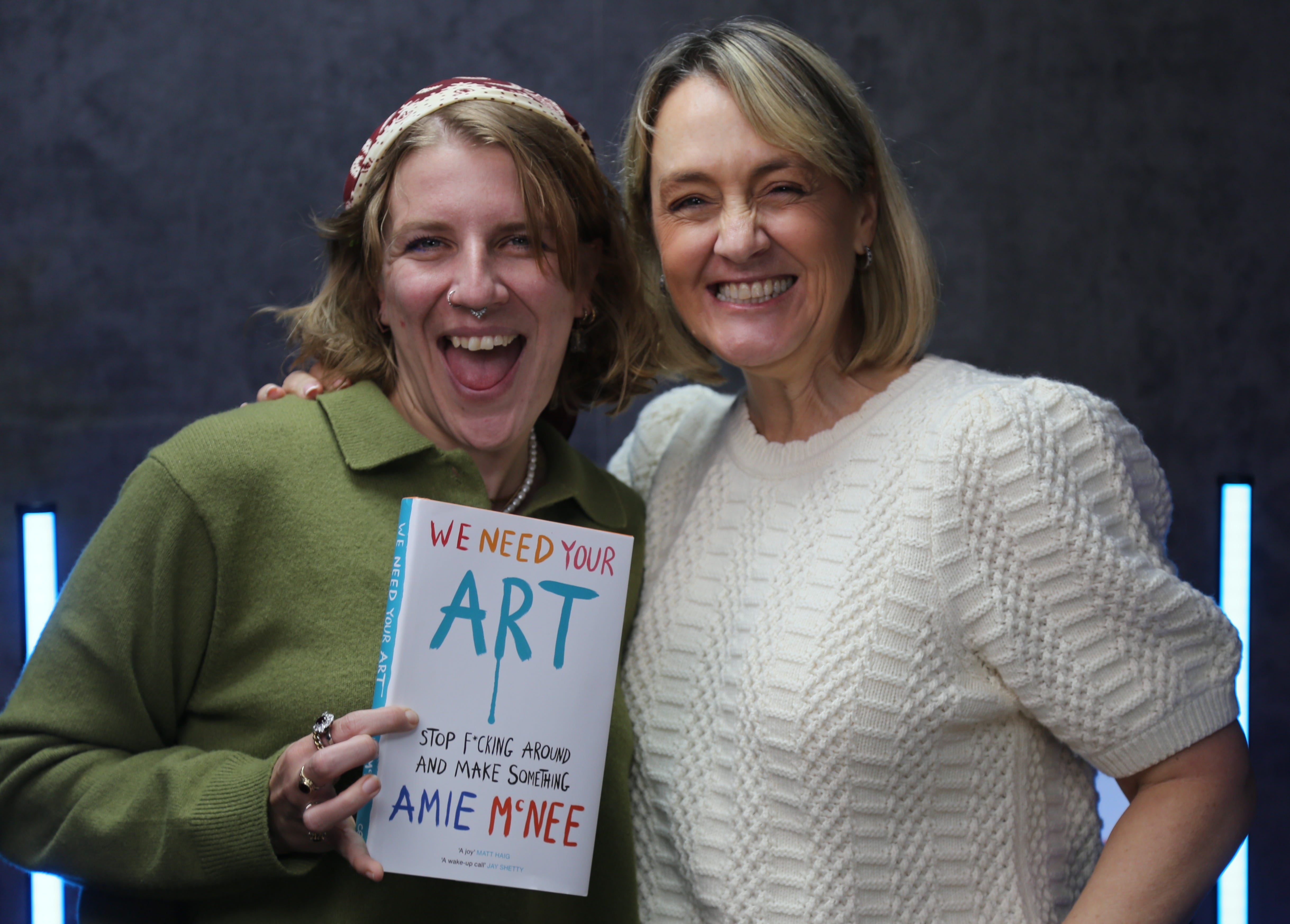
What I was not expecting was to read about research linking creative pursuits to mental health, physical health and community health. In fact, every aspect of our wellbeing is supported by creativity. (Perhaps what I’d stumbled upon intuitively with my clients actually had some science to explain it.)
I wasn’t expecting when I sat down with Amie that we’d be talking about the need to feel safe to make mistakes, to have strategies to regulate your nervous system, or that we’d be diving into the shame of jealousy and how to harness that emotion for personal growth.
My conversation with Amie was one of my most favourite podcast interviews and it’s available now wherever you listen to podcasts, as well as on YouTube.
I’d encourage every single person - whether you think you’re a ‘creative type’ or not - to tune in and hear what Amie has to say about this.
We need your art.
More to the point, YOU need your art.
So stop f*cking around and make something.
Cass xo
PS. I jumped on a call with a coaching client this morning and she said, “I was just listening to your podcast with Amie and it was like therapy for creatives. I had to share it in my group chat and told all my friends to listen.”
Love that kind of feedback

.